The national housing agency projected Canada needs 417K-469K new homes yearly through 2036 to restore pre-pandemic affordability, far above current construction expectations.
Canada still faces a long-term housing supply gap of 187K-238K homes per year over the next decade, based on current projections nationally.
Construction expected to slow faster than demand, leaving Canada short of needed homes and making the current downturn a key risk to affordability goals.
The scale of the shortage means construction would need to rise dramatically from current projections, with much of today's building tied to projects already underway.
Nationally, Canada needs roughly twice as much housing construction as currently projected to improve affordability over the next decade under the current outlook.
Category: Latest Posts
-
Canada Needs Twice the Projected Homes
-
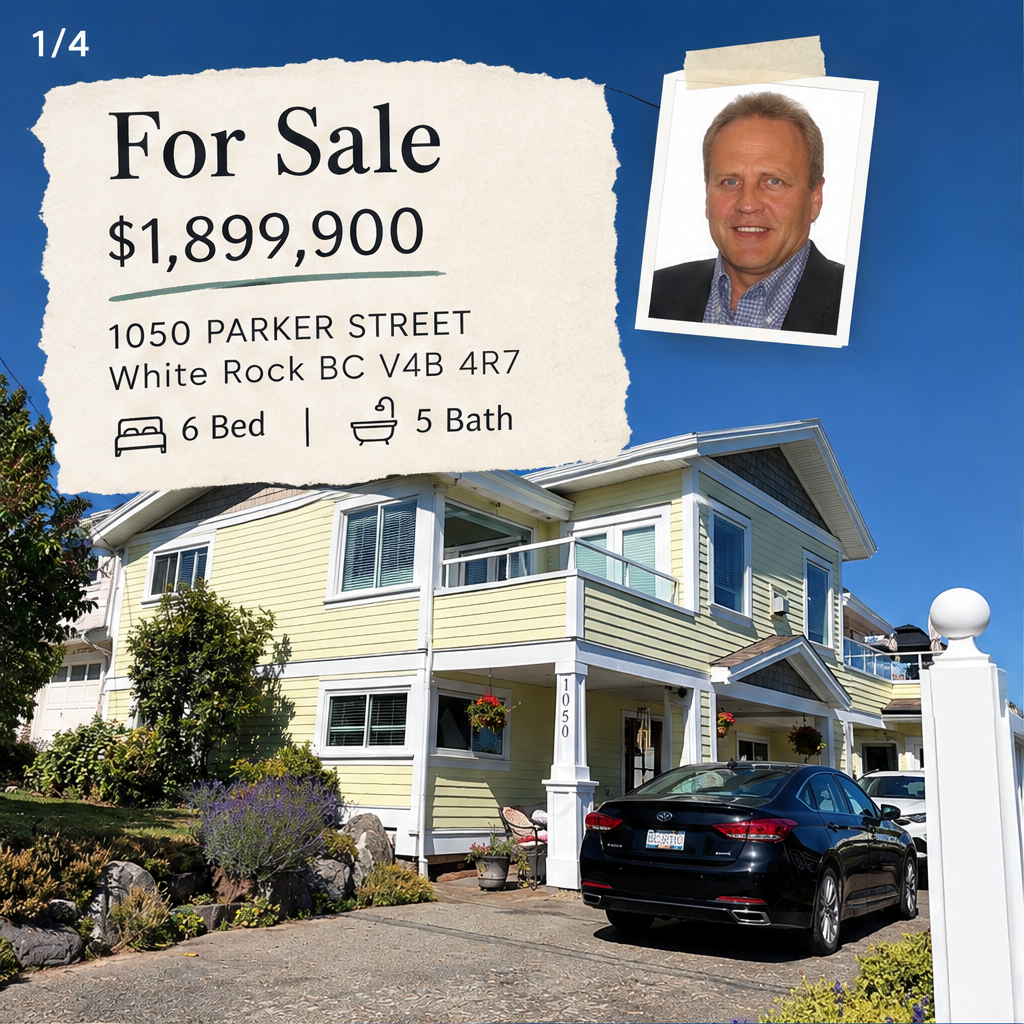
1050 PARKER STREET, White Rock BC V4B 4R7
Experience coastal elegance with panoramic Ocean & Gulf Island views from the kitchen and 660 s.f. entertaining deck and 2 additional decks with views too!. Masterfully updated including a 1500 s.f. addition in 2011. Designed for seamless entertaining, 2 ovens, 2 dishwashers a massive 14’ island, six burner gas range, perfect for hosting sunset gatherings. Lots of parking even for the RV. Retreat to a primary sanctuary featuring a spa-inspired ensuite with a jetted tub and steam shower. The flexible floor plan offers 6 BDM 4.5 bathrooms, incredible potential for an in-law suite or 2 to 3-bedroom secondary suite. Call today.
Continue to full article -
Canadian Housing Affordability Still Needs Improvement
Canada's affordability reading reached ~41% in Q2 2026 after an 11th straight quarterly improvement, helped by lower prices, lower borrowing costs, and rising incomes.
Even after ~13 ppts of improvement from the recent peak, ownership stayed difficult nationally, with housing costs still taking roughly two-fifths of avg. household income.
The measure may look somewhat better than many households feel because it uses avg. disposable income, not median income, which can overstate affordability.
A bank economist said the recent reset reflected earlier rate cuts, a ~20% national price decline from the 2022 peak, and stronger personal incomes.
Looking ahead, slow income gains and limited rate relief leave more of the adjustment to prices, making further national declines still possible. -
BC Standing Inventory Reached 6.7K
Across BC, standing inventory totaled 6.7K homes, including 5.5K condos, and the count covered condos, townhomes, plus some multiplex units provincewide.
Among tracked BC cities, Burnaby led with 1.21K unsold homes, followed by Vancouver at 1.02K, Surrey at 798, and Coquitlam at 620.
Richmond recorded 396 units, Kelowna 372, Langley Township 276, New Westminster 224, and Delta 211, showing inventory spread well beyond BC's largest markets.
Additional BC counts included Langford 188, Esquimalt 173, the City of North Vancouver 135, Abbotsford 118, and Chilliwack 100; listed cities totaled 5.84K.
A common presale narrative blamed mainly studios and one-beds, but broader BC size and avg. price data pointed to a different story. -
National Day for Truth and Reconciliation
National Day for Truth and Reconciliation honours survivors and raises awareness about their experiences.
It's a symbol of Canada's commitment to reconciliation with Indigenous communities.
Wearing orange shirts on this day symbolizes respect for survivors and raises awareness about residential schools.
May this day inspire a future where every voice is heard, and every spirit is healed.
Together, we can create a tomorrow filled with hope and endless possibilities. -
Canada Home Prices Eye Modest 2026 Rise
Analysts expected Canada’s avg. home prices to edge higher by end-2026, signaling gradual recovery after recent fluctuations and an extended period of relative stagnation.
Expected lower interest rates, continued population growth, and persistent housing shortages in many urban centers were cited as key supports for price gains.
An economist at a major bank said the market was showing resilience, even as affordability remained a concern for many Canadians nationwide.
Price growth was expected to vary across Canada, with larger metropolitan markets potentially seeing stronger gains while smaller markets stayed relatively stable.
Experts advised buyers and sellers to watch market trends closely and weigh longer-term factors when making decisions in Canada’s shifting housing landscape.
The national outlook stayed cautiously optimistic, with Canada’s housing market expected to keep recovering and grow at a measured pace through 2026. -
A New Era for Canadian Housing
We're seeing a shift in Canadian housing: buyers are taking their time, weighing options, and approaching every step with greater care. Economic factors are encouraging thoughtful planning, which means both buyers and sellers can pause, reflect, and make decisions they feel good about. As someone who values clear guidance and honest advice, I appreciate this move towards more balanced, informed choices. People are coming to the table with a deeper understanding of financing and are doing their due diligence, making every transaction more strategic and transparent. It's encouraging to see technology and AI being adopted to streamline the process further, supporting a real estate experience where integrity and professionalism truly matter.
-
BC Standing Inventory Data By City, Size, And Average Price
As of August, there are 6,687 unsold residential units in BC, including 5,511 condos, with the highest inventories in Burnaby (1,208), Vancouver (1,017), and Surrey (798). The data covers condos, townhomes, and multiplex units across various cities. Contrary to common belief, the unsold inventory is not solely due to an oversupply of small "dogcrate" units, as unit size and average price data suggest a more complex situation.
Continue to full article -
Home sales remain low but recovering slowly, says BCREA
Residential home sales in British Columbia fell 4.8% in August compared to last year, totaling $5.2 billion, and remain 25.4% below the 10-year August average. The average provincial home price dropped about 1% to $924,826. Sales volume decreased 5.5% with 46,069 homes sold. Greater Vancouver saw a 1.3% price decline to $1.21 million and a 3.6% sales drop. Year-to-date sales are down 6.5% to $43.26 billion.
Continue to full article